Slab City, California
August 2026 Issue
* THE LAST FREE PLACE IN AMERICA
* THE LAST FREE PLACE IN AMERICA
THE LAST FREE PLACE IN AMERICA
by George Auctor
Photographs and captions by Dylan Kulmayer
We travelled to Slab City to see if we could leave a piece of ourselves there. For some, the pieces are all that are left.
“The world reveals itself to those who travel on foot. That is where reality really starts to kick in,”
so said the filmmaker Werner Herzog. To travel with little more than desire invites something very ancient to us, hospitality, he says. So we travelled, in search for this revelation, along sand baked roads near the edge of the Sonoran Desert.
It is here, in the 108ºF heat of Southern California, there resides a little-known outpost known as Slab City. This mock village lays claim to a new kind of frontier, ‘freedom’ the hand painted signs proclaim. Slab City earned its name from the abandoned Marine base following World War II that has now transformed into a community of social expats, artists or others seeking to escape the eye of the law. In this ramshackle paradise, there are no outside concerns. There is no government, there is no expectation, and there is no running water.
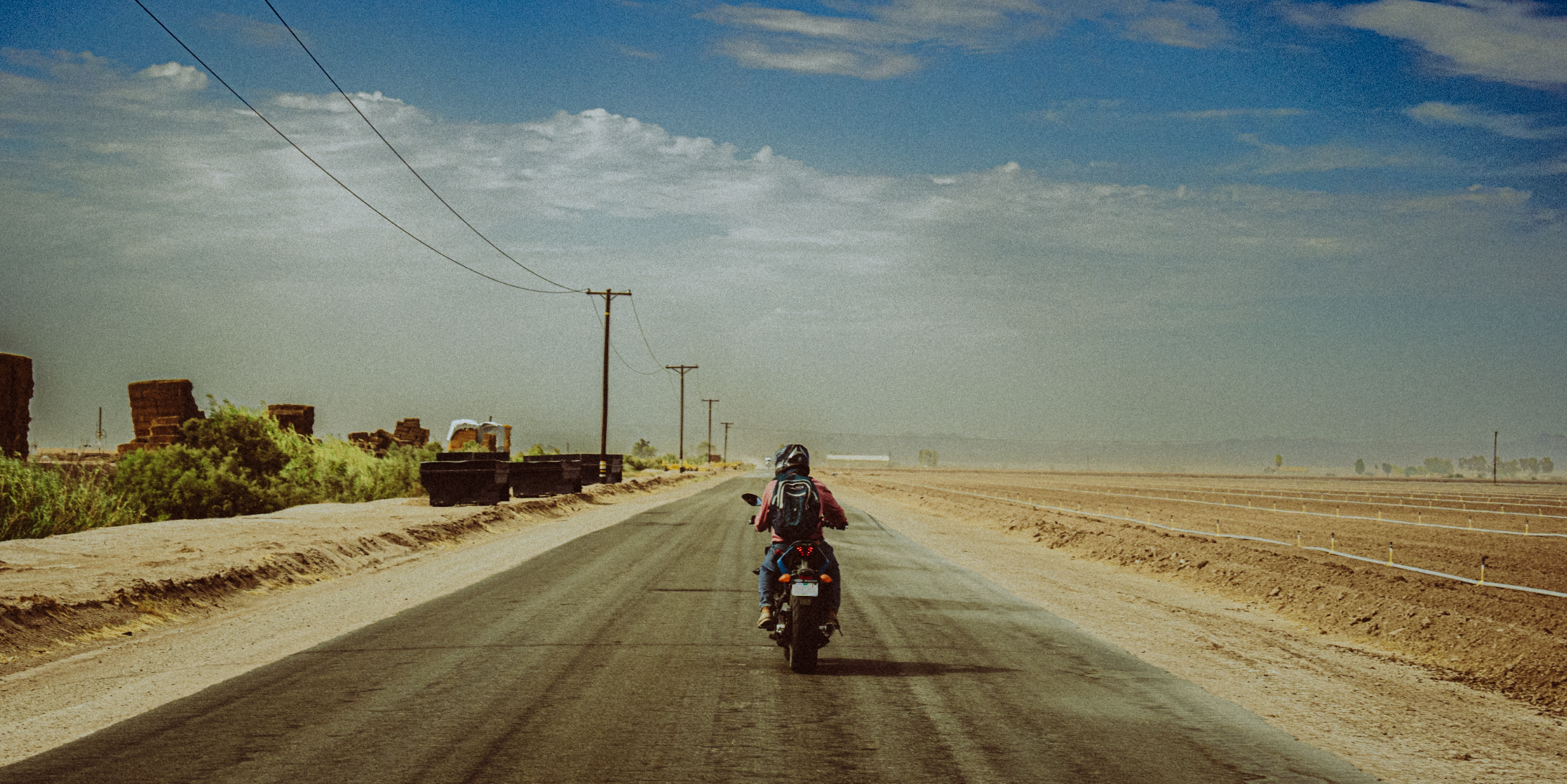
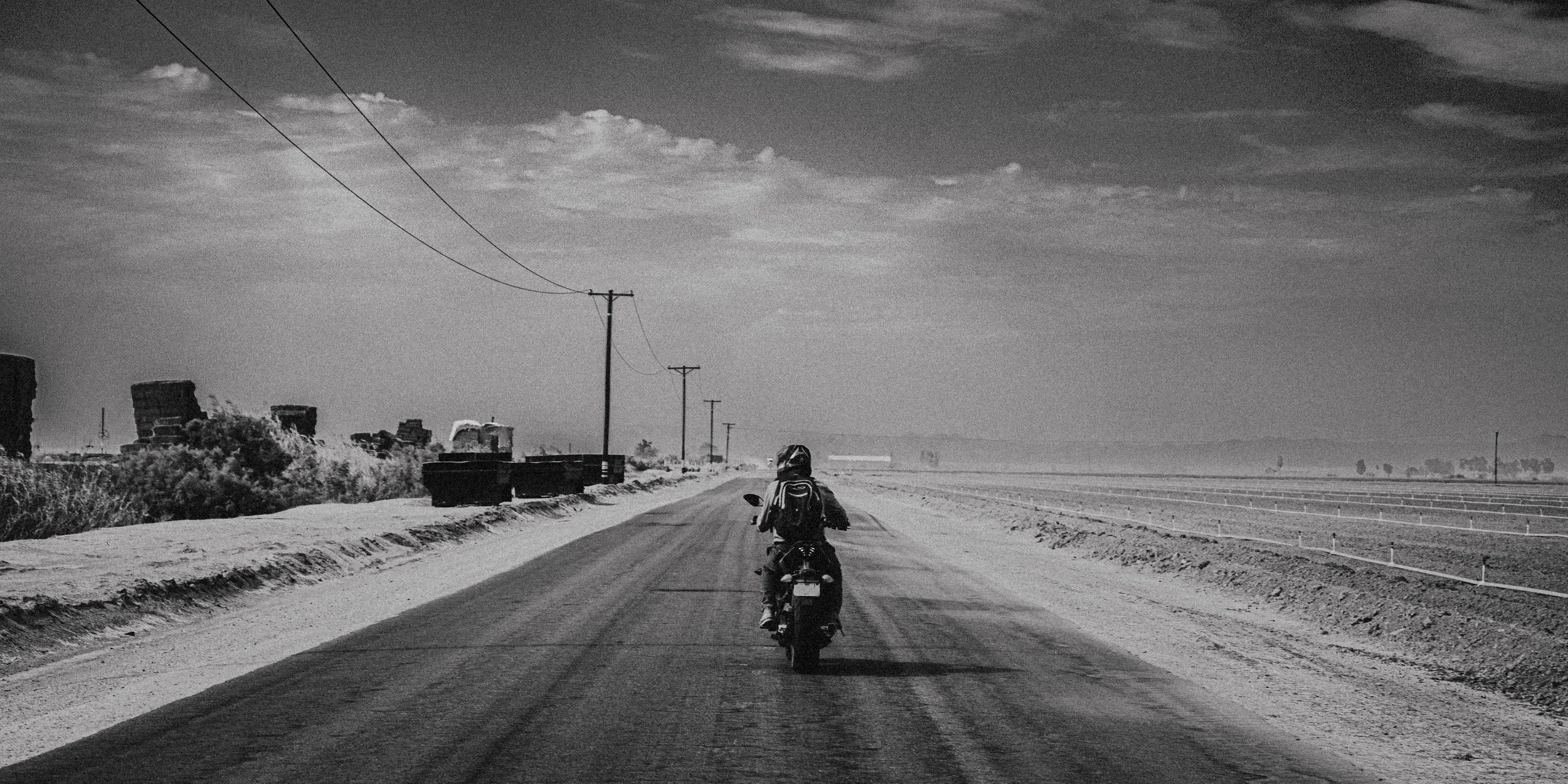
An unknown traveller passes us going north on State Route 111 to Niland in the Salton Trough of the Sonoran Desert, the last stop before entering the off grid town Slab City.
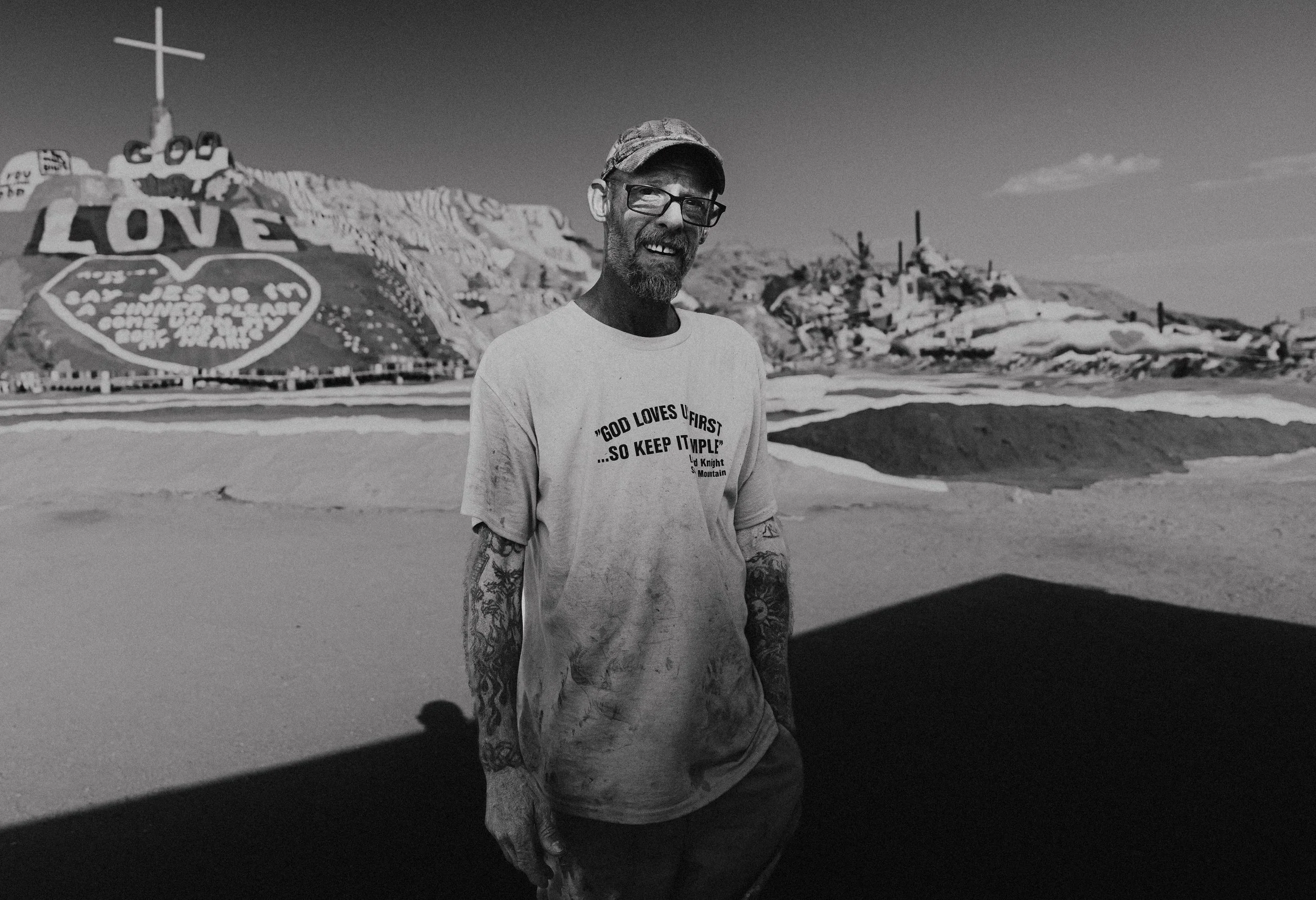
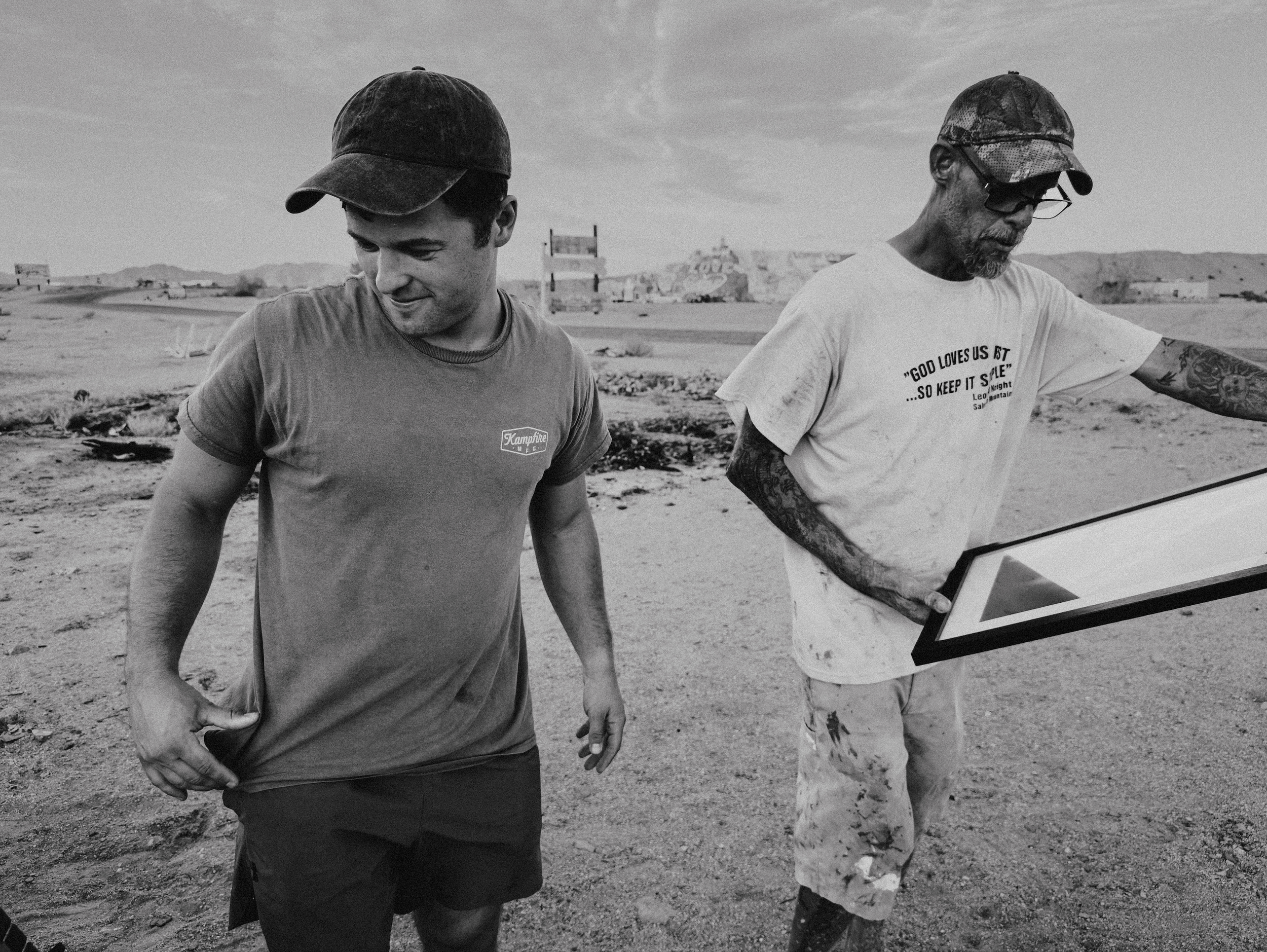
△ The paint splattered Paul poses for a portrait. Pictured to his left is Salvation Mountain, to his right, the ruins of Knight’s first attempt at establishing such a monument to Christ.
‘I want to leave a piece of myself here,’ Dylan said, camera gripped in one hand and steering wheel in the other.
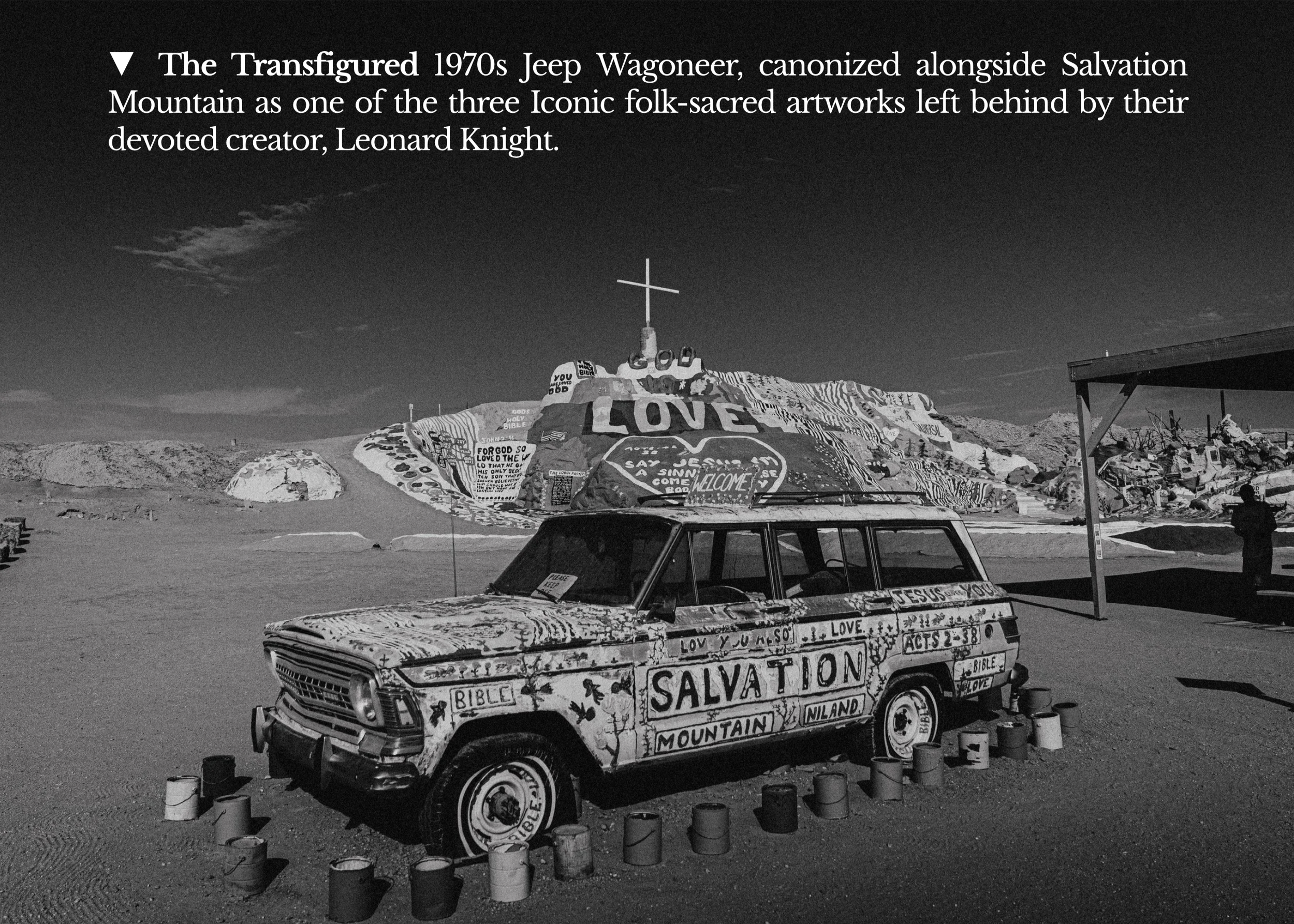
On our approach, we see Salvation Mountain, a monolithic tribute painted against the side of a hill, proclaiming in bold letters, GOD IS LOVE. “It was made by a guy named Leonard Knight,” says Paul, a resident and self-appointed caretaker of the site, himself marked with paint. Paul is a gentle man, sincere and inviting.
He handed us a pamphlet.
“The whole reason we’re even out here is because he spent 15 years hand sewing this balloon. He saw one of them up in the air and said, ‘man, if I could get GOD IS LOVE on that, everyone could see it.’
He explained to us how Slab City had blossomed to fame largely from Leonard Knight’s obsession to share this message of God’s Love as loudly as possible.
As we listened, it became apparent that this shanty town had been influenced by the ancient tradition of prophets throughout history, that is, to escape to the wilderness in search of God.
We moved on into the heart of Slab City.
Lining the main dirt thoroughfare, it seemed as inhospitable as the surrounding desert. Amorphous compounds lined by wire fence or flotsam stretched ahead, apparently abandoned. Another compound further along boasted a sign, Church of Enlightenment. Beyond the makeshift curtains, wooden scraps and refuse, stood a timber structure reminiscent of a medieval watchtower. On the same fence line, another sign advertised Bird Sanctuary and Botanical Gardens.
We called out in the silence, wondering if anyone was home, but there was no answer.
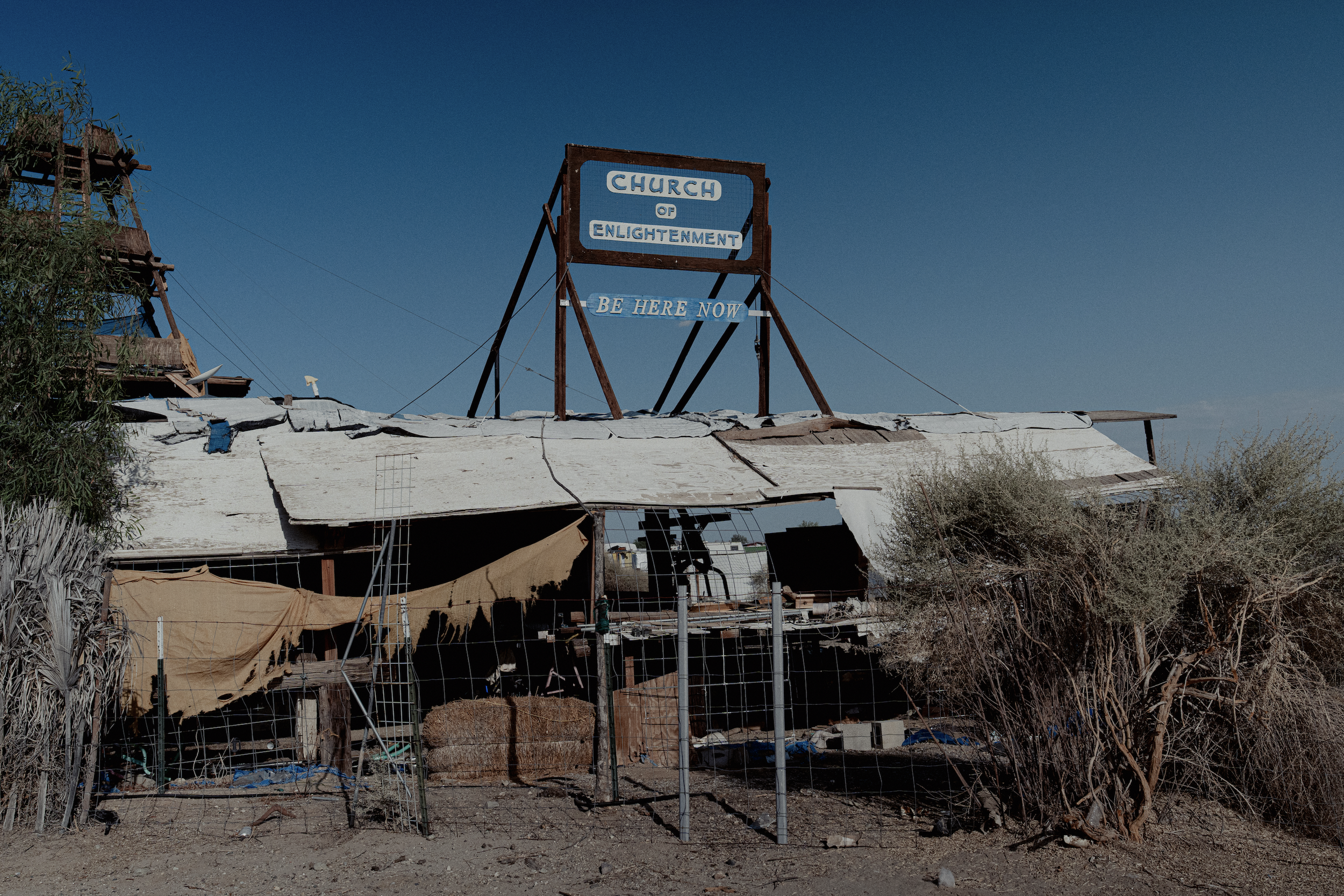
'Be here now' posted over the abandoned, trash filled church.
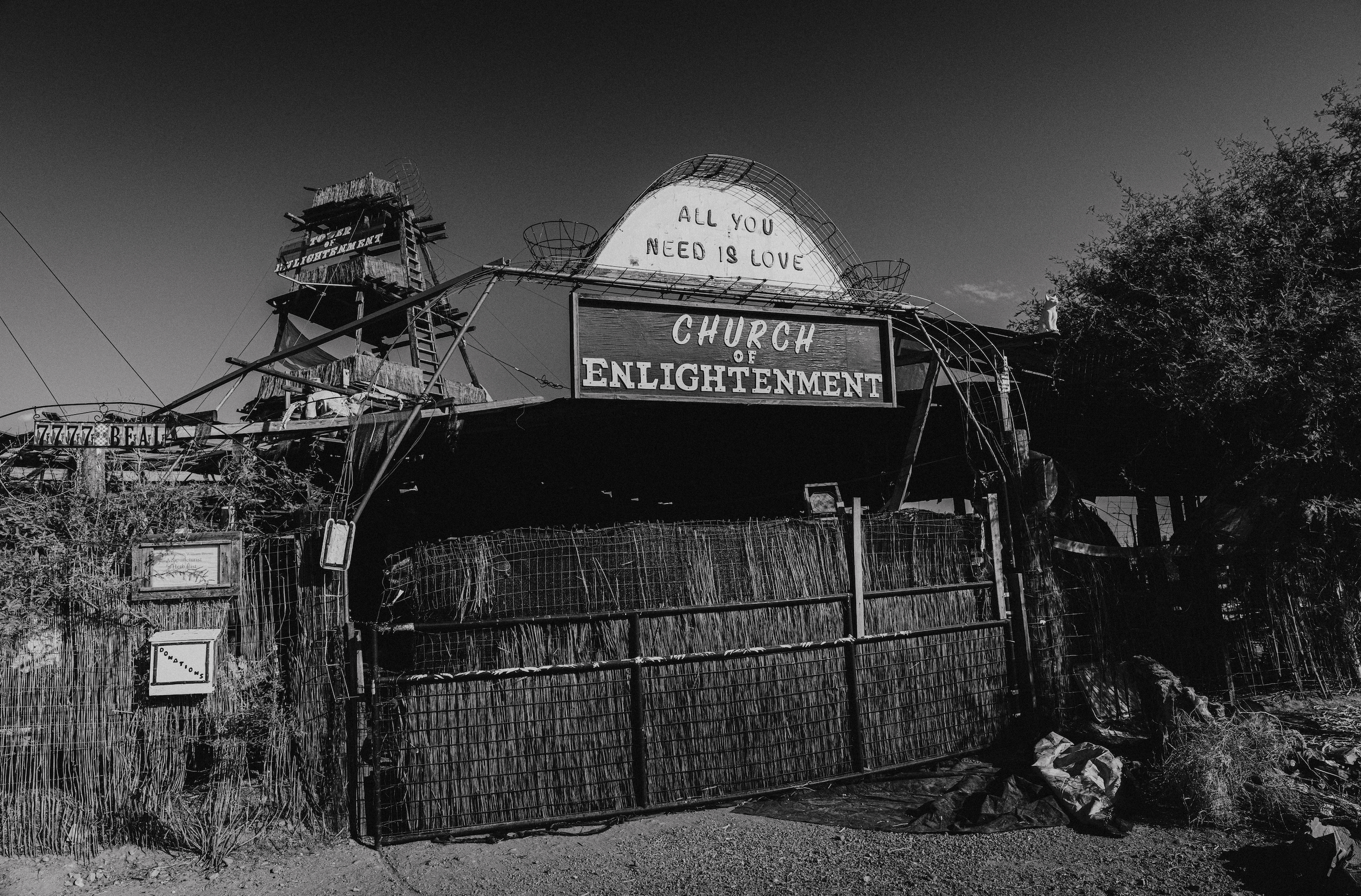
From the devoted to the deranged, residents of Slab City erect various spiritual structures. Here, a cathedral of trash titled the 'Church of Enlightenment'. Nobody was home.
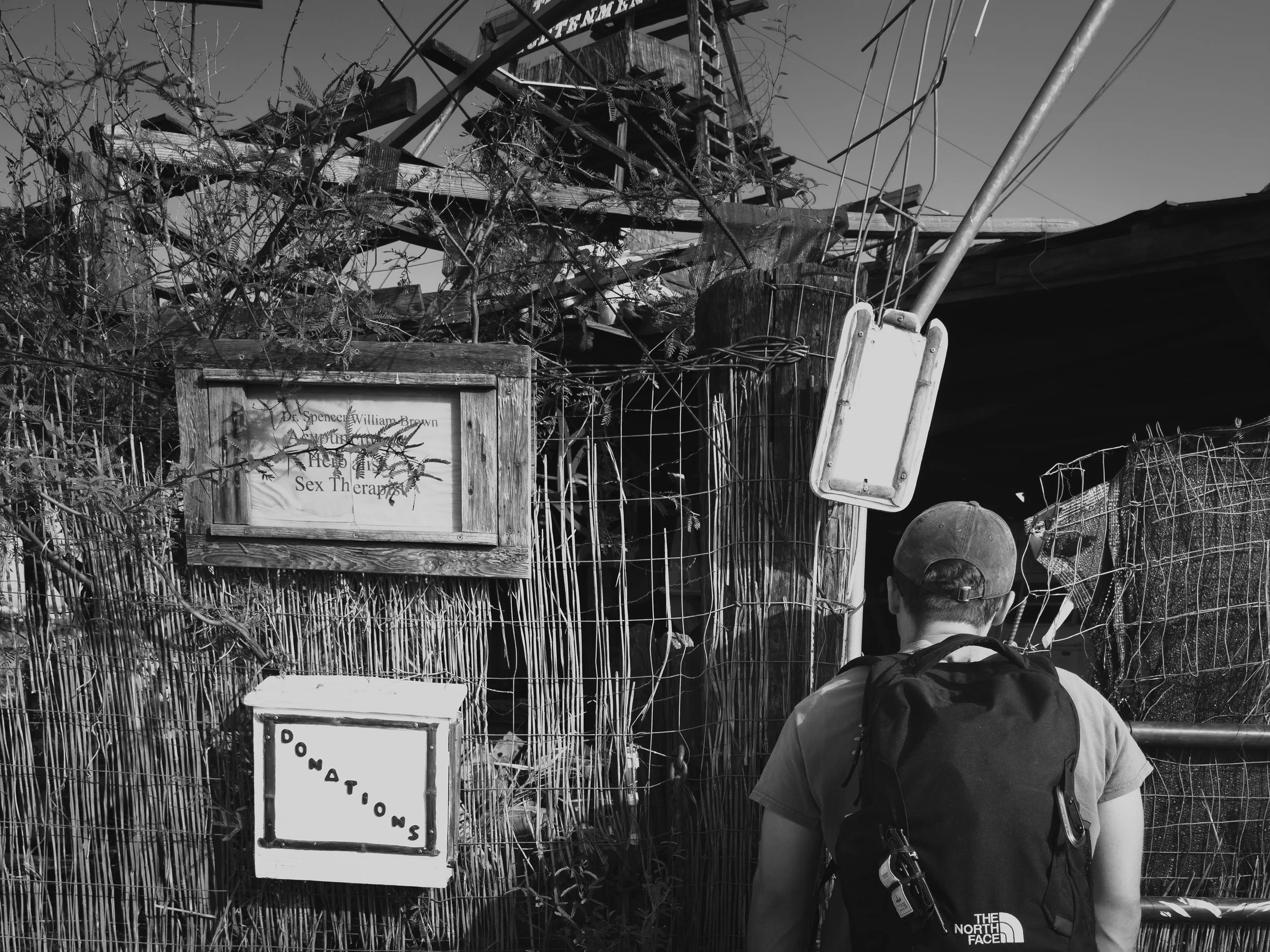
Most structures in Slab City have been abandoned, ransacked or burned. We could not reach Dr Brown to climb the Tower of Enlightenment. It seemed this place had been vacant for quite some time. We did not attempt to make entry.
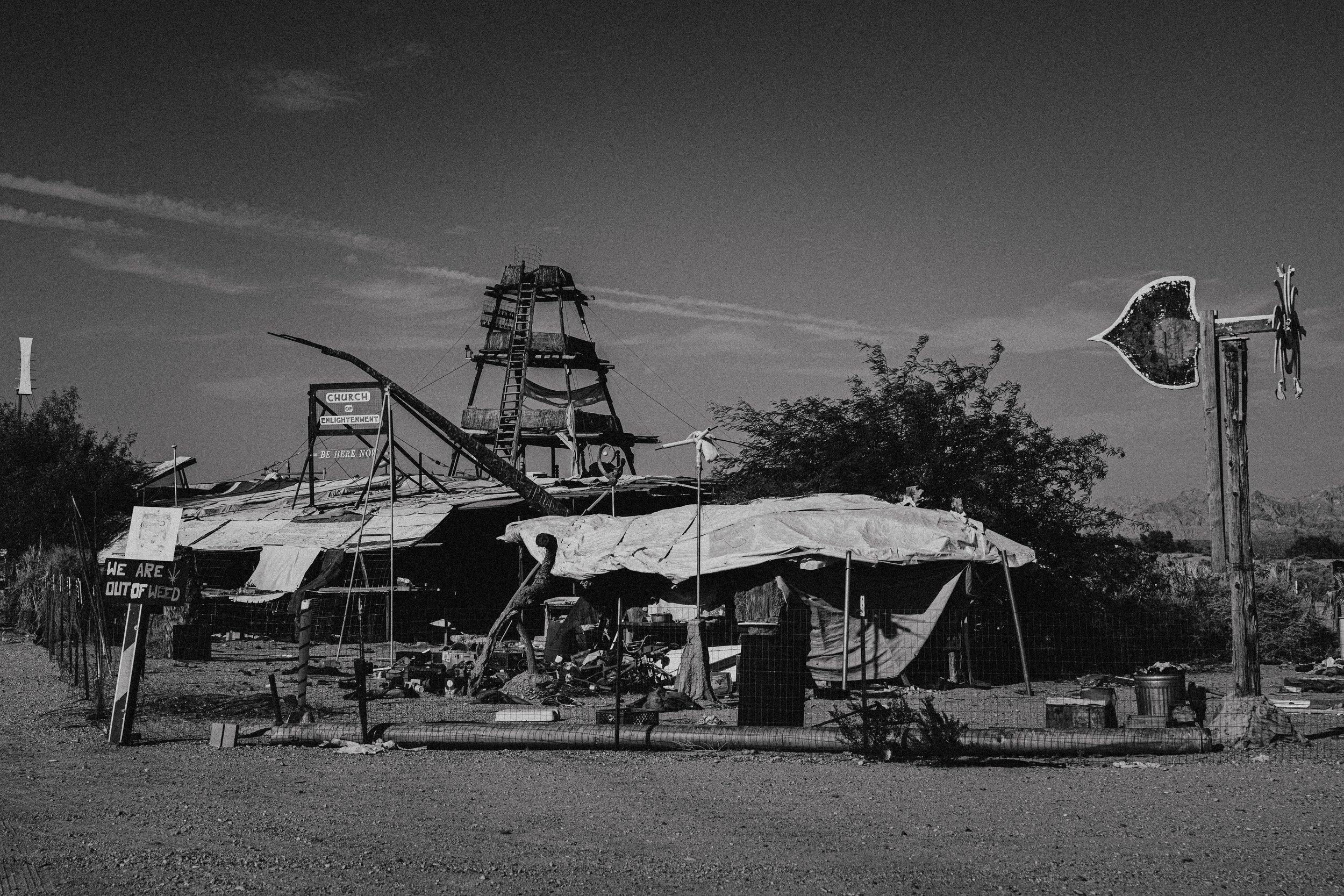
The Church of Enlightenment pictured from the Southwest Side on Beal Road.
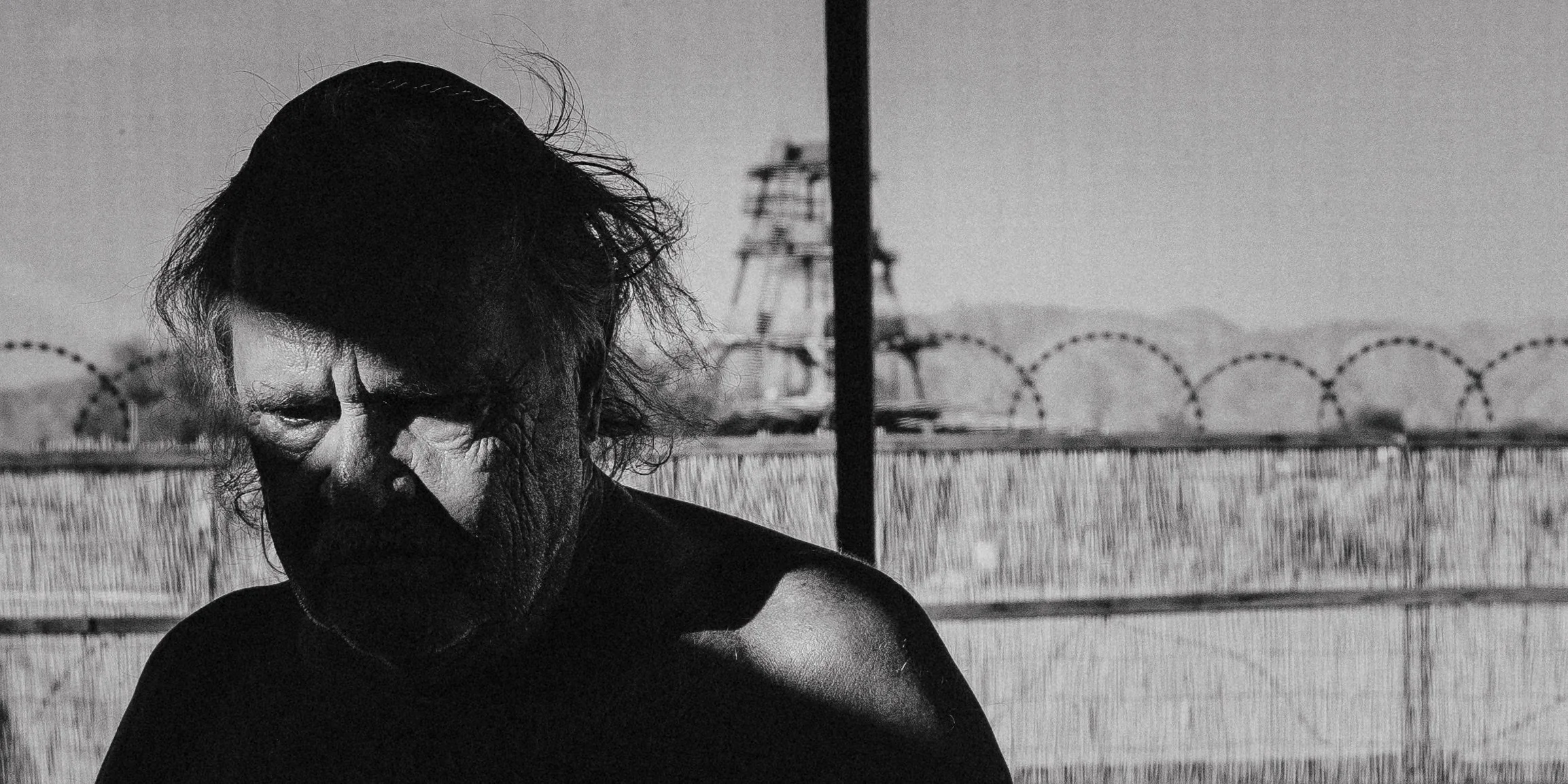
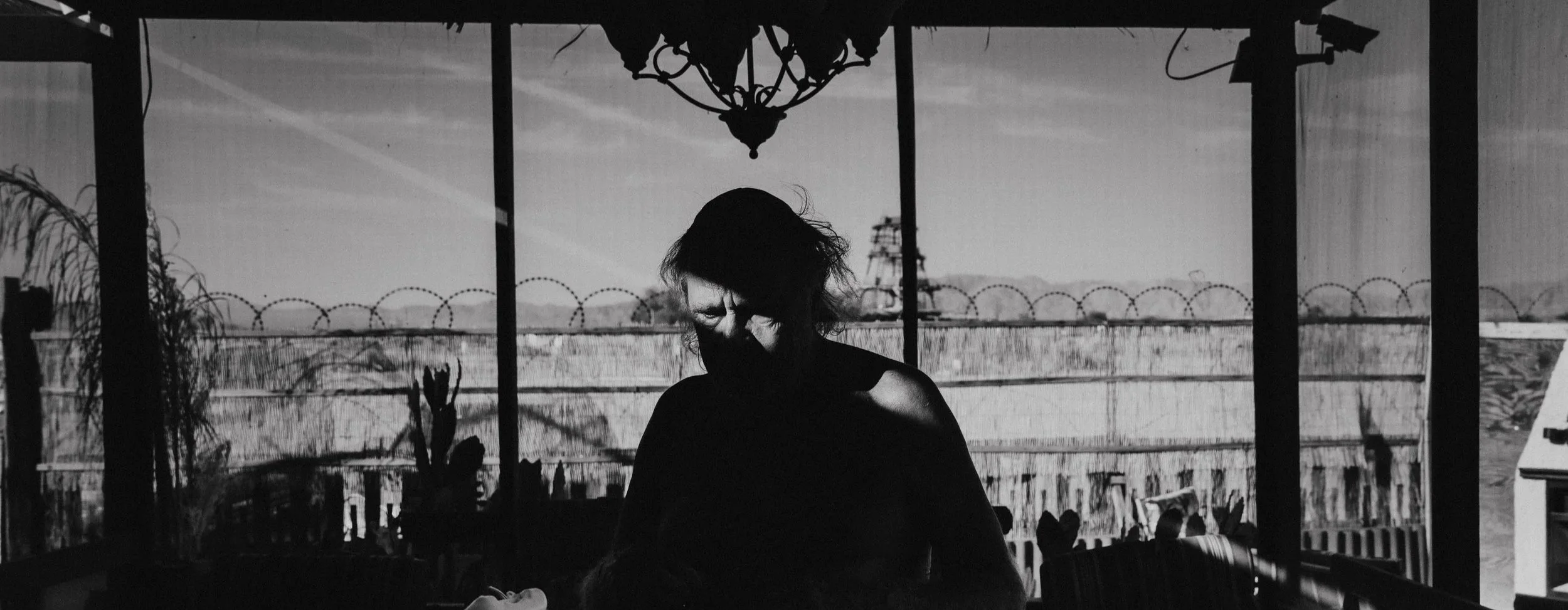
△ David lives under the shadow of the threat of violence as the culture of Slab City has taken a violent turn. Here he is pictured within the perimeter his razor wire fence.
Nearby, from within an especially fortified abode, a generator hummed. We drew closer, hoping to meet someone and encountered a shirtless man watching us from behind his razor wire fence. We explained we were there to meet people and, to our surprise, the man opened his door and introduced himself as David.
“Would you like to come in?” he asked. The door opened into a small dirt lawn guarded by two yipping dogs. We followed him in. Dylan, noticing he wore a kippah asked, “Are you Jewish?”
“I am.”
“I myself am a Christian,” said Dylan, reaching his hand out in greeting.
David chuckled. “Yeah, we get a lot of those here,” he said as we shook hands.
“I’m sorry about the mess,” he said. “I wasn’t expecting guests.”
We maneuvered around a table full of clutter. The floor was covered in spent Sam’s Club diet cola cans, half empty bottles of liquor and on the side table lay a revolver.
David invited us to sit. “You have to be careful walking around. People aren’t always very kind around here.” He motioned to the razor wire and explained it was a necessary recent addition. As we made our acquaintance, David described how he had lived at Slab City for many years, initially drawn to the hippie culture. It had changed a lot in the last 10 years, he said, largely owing to the encroachment of meth and crime.
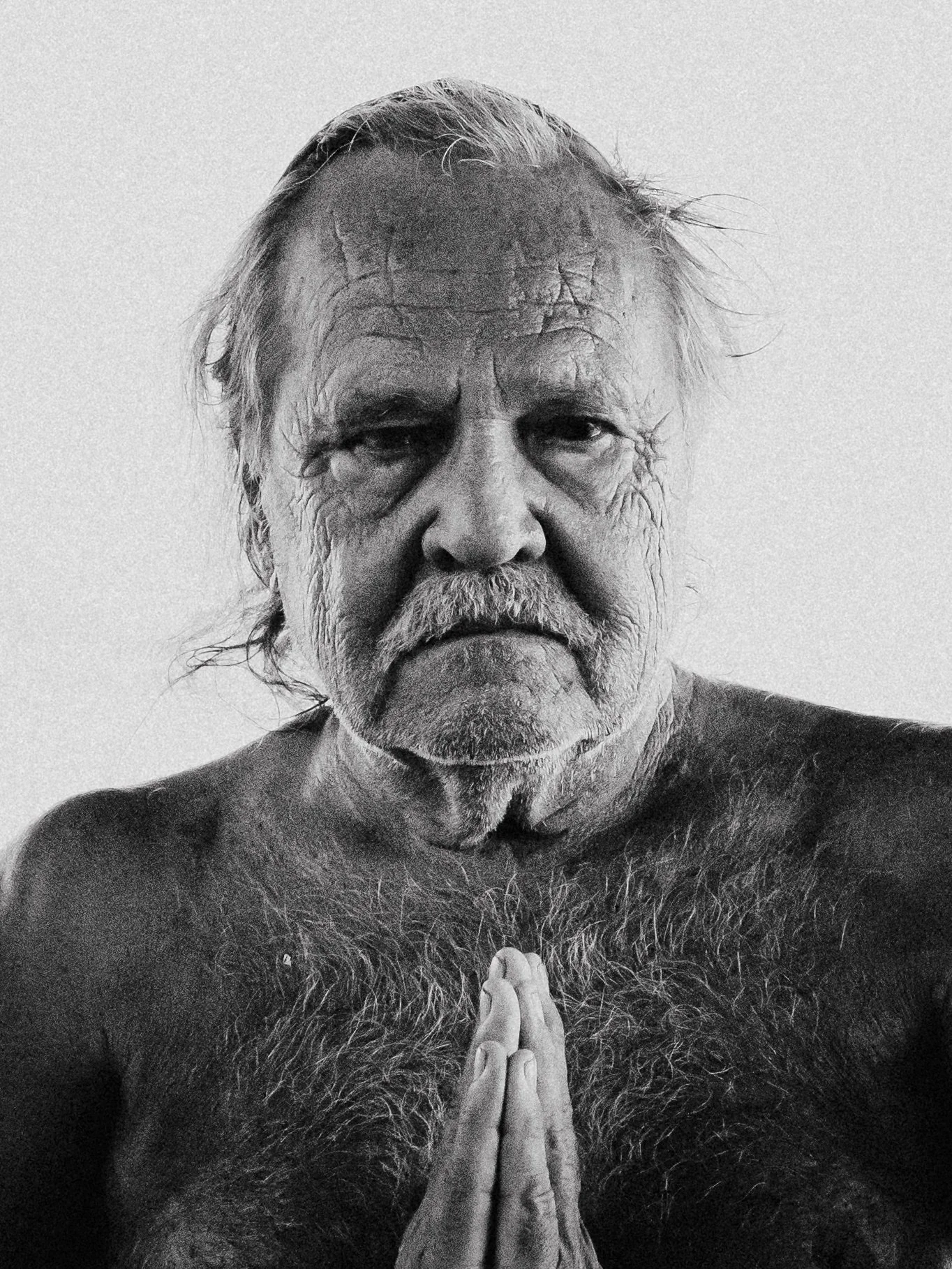
He was soon moved to tears as he shared with us how his friend had just died a few days prior.
“I don’t understand why. He was a young guy and we were watching TV on Friday. Then we went swimming and he collapsed. I called 911 and they took him away.”
He gripped his kippah in grief as he described how a couple of days later he had received bad news from the hospital. He choked as he grappled with the painful memory.
“I should have done more.”
In honor of our faith, and amid the backdrop of this frontier settlement, we reminded our new friend of our mutual belief in a loving Heavenly Father.
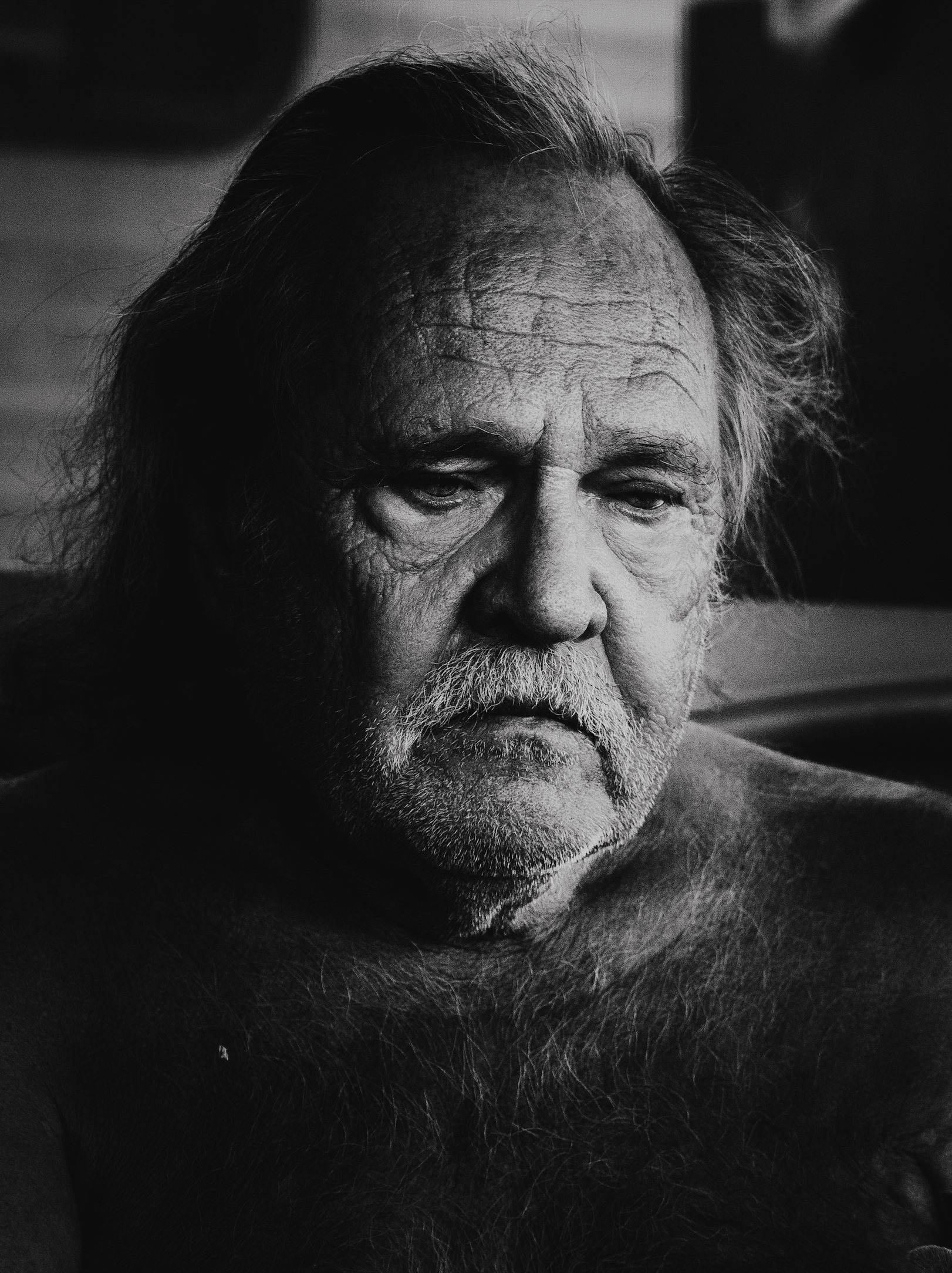
△ The desert hermit David recounting woeful stories. We mourned with him and offered him the solace of someone to talk to.
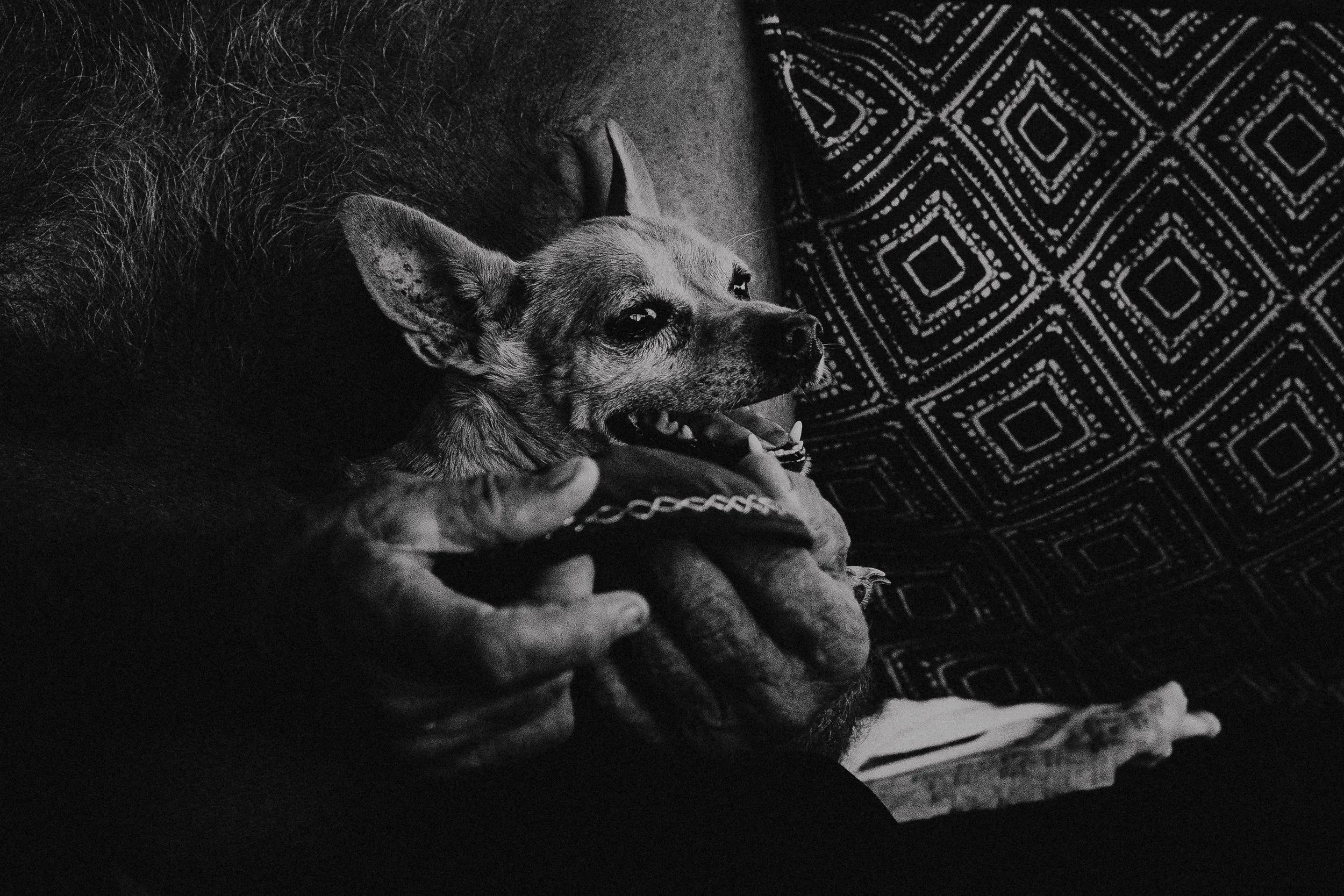
△ David’s pets sometimes find their way out of the property, as they did during our visit, sending him into a panic. In the Sonoran heat, survival runs on a short clock.
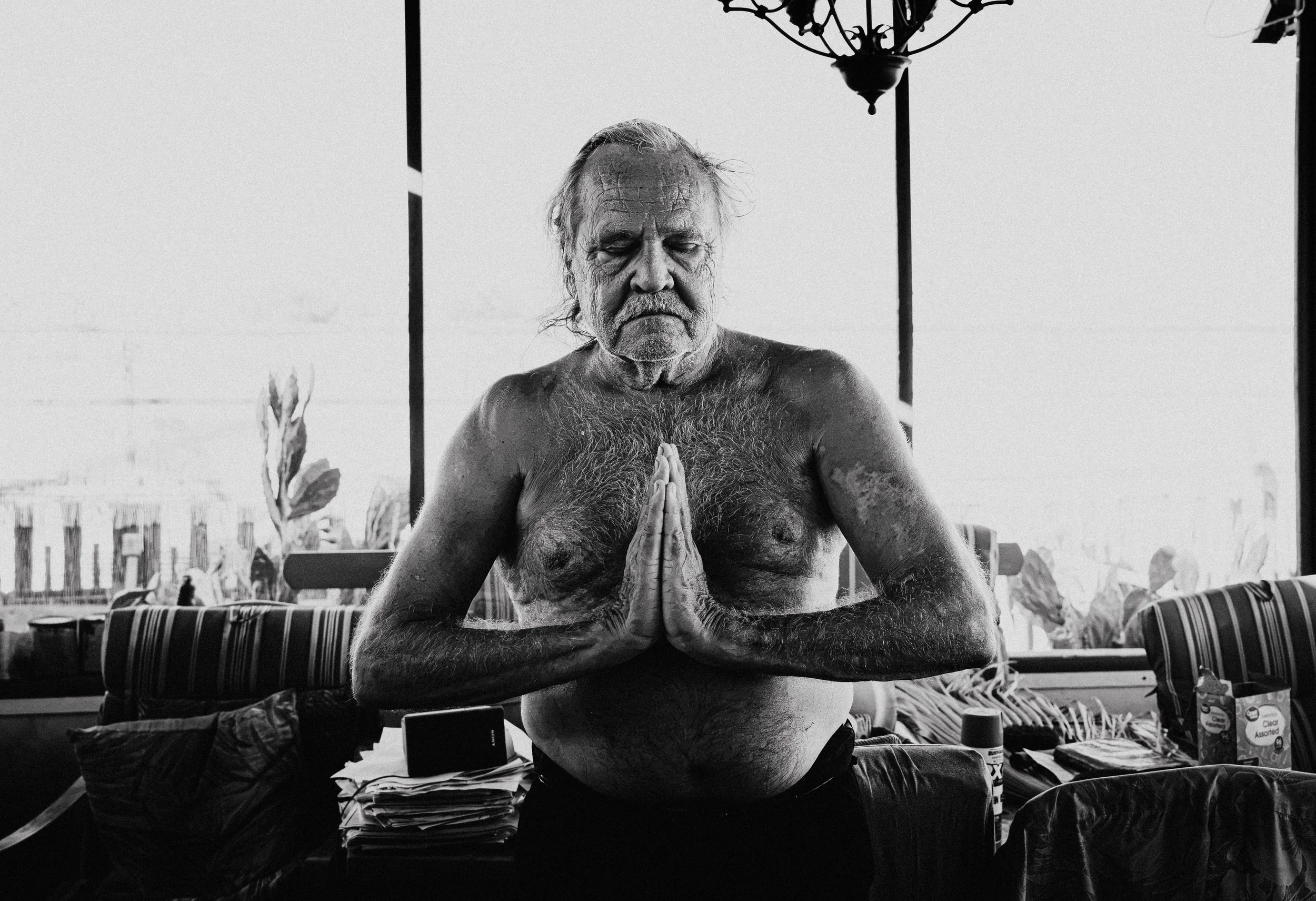
Dylan joined Paul in some yoga poses to shake off the grief. We asked to take his portrait then said our farewell.
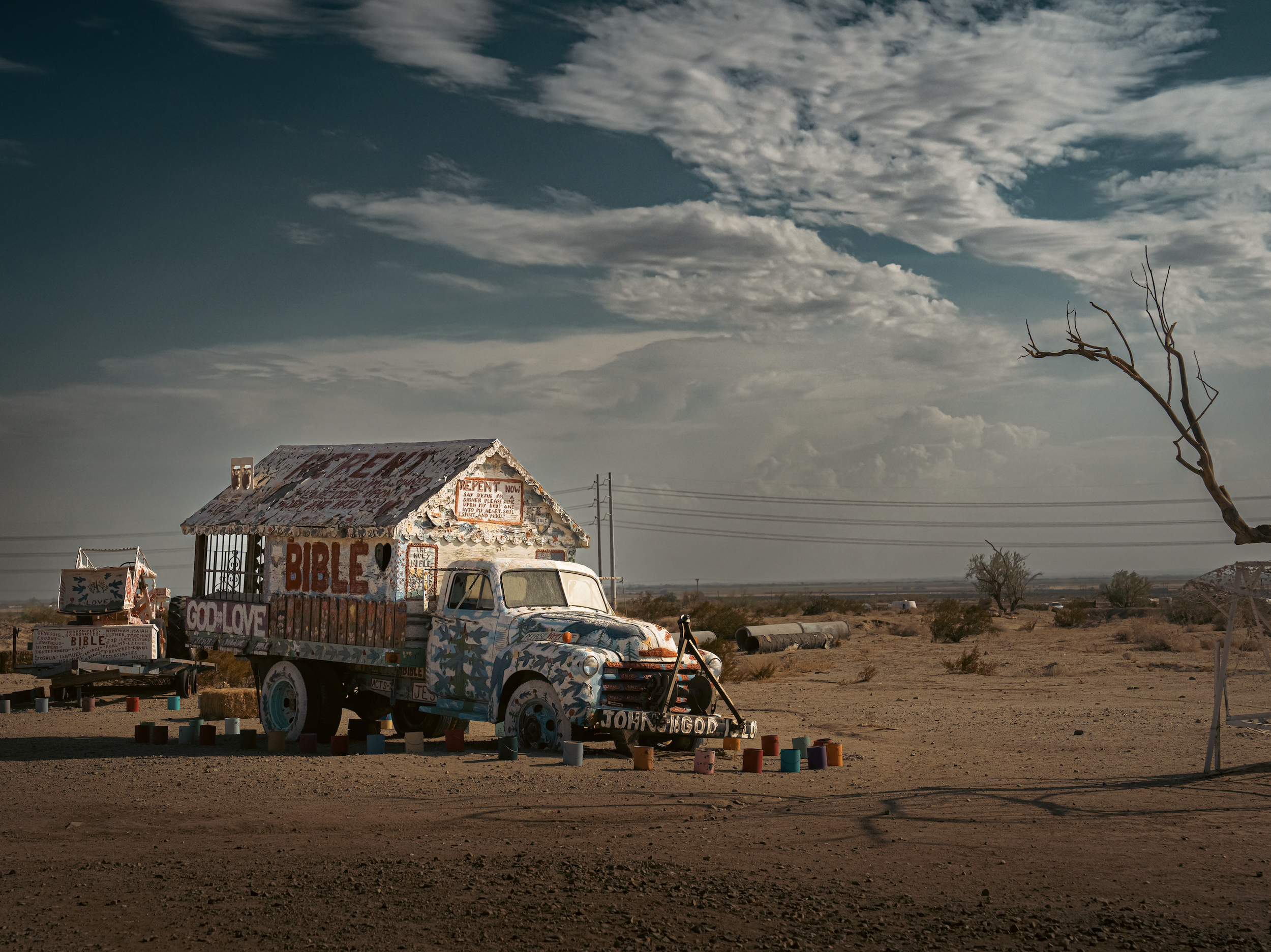
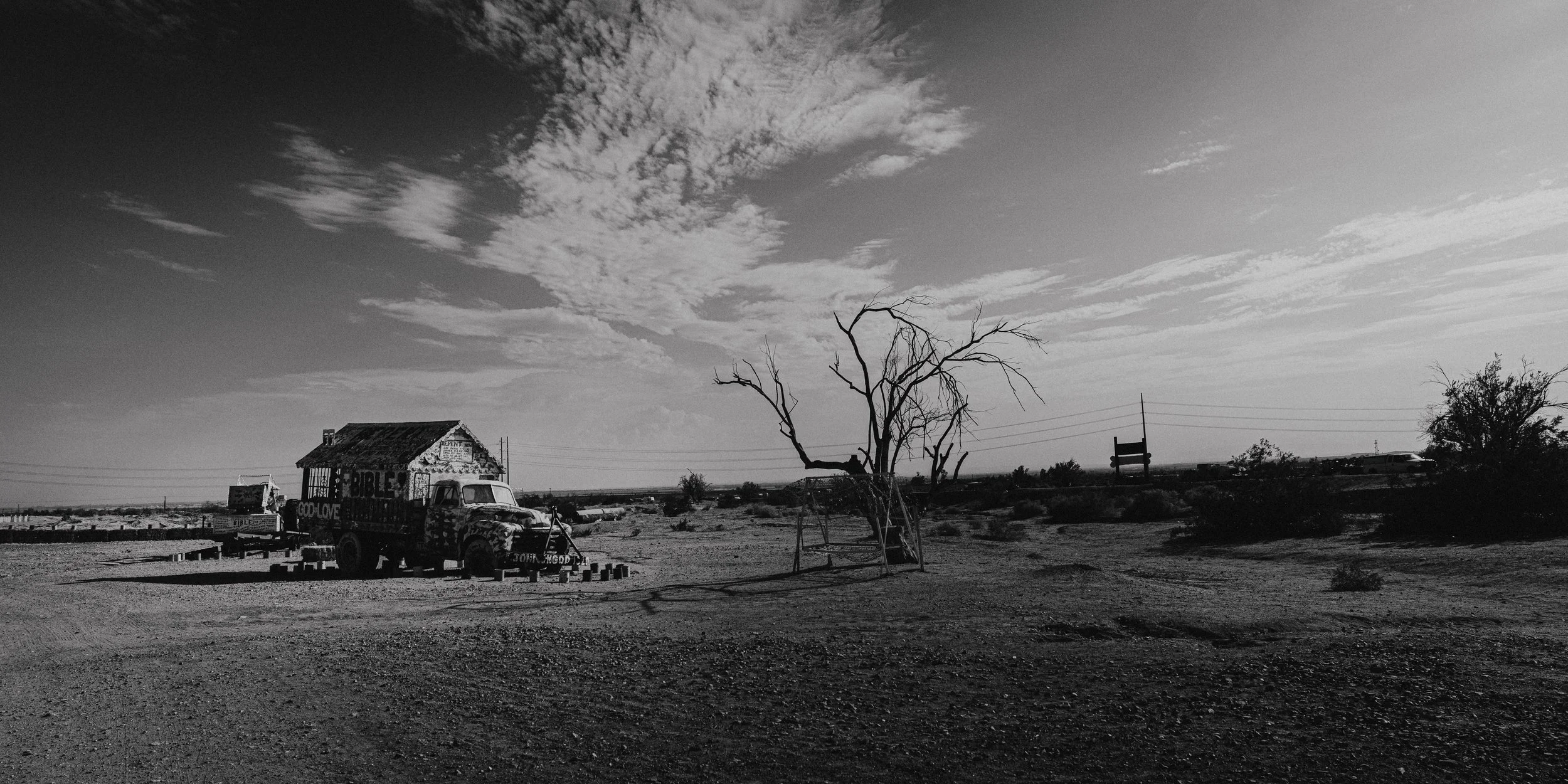
Under a gathering sky, as the last evening light raced across the desert, we photographed Leonard Knight’s home on wheels. The Dalí-esque scene felt like the quintessence of this strange land, a voice crying out in the wilderness: repent, for the kingdom of heaven is at hand.
Before we left town, we stopped one last time to see Paul.
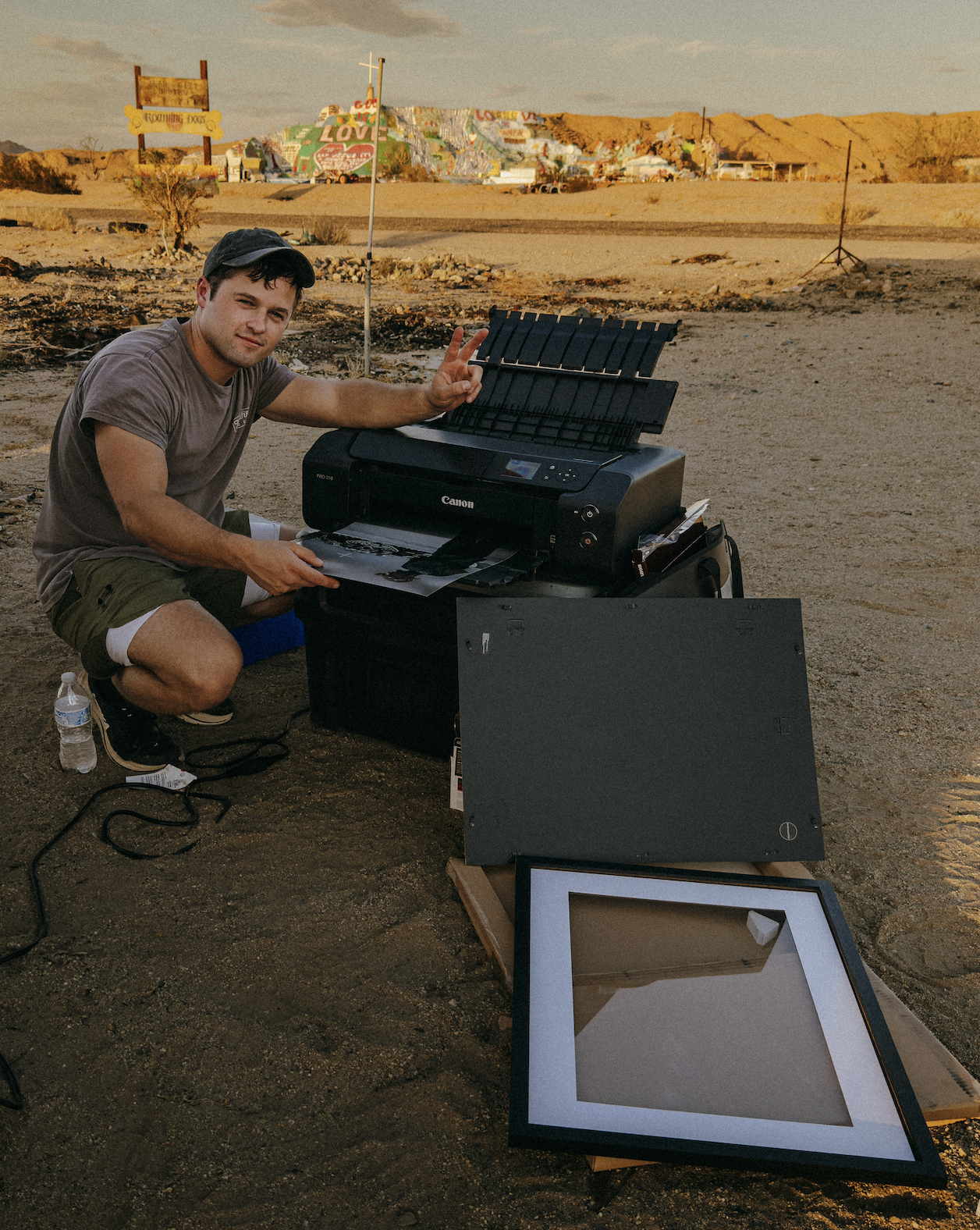
“Can we use your inverter for our printer?” Dylan asked.
Paul graciously assented. Before long, the printer was connected and began to whir and click and judder as it sat atop a box in the desert sand against the backdrop of Salvation Mountain.
After a moment, Dylan produced a crisp portrait of Paul from our initial conversation, framed it and handed it over. “I hope you like it”.
And so our time in Slab City came to an end, for now.
As we journeyed back to the painted asphalt of society, we wondered about the characters we met, the faithful disciples on their spiritual journeys, the desert nomads trying not to be found and the good men grappling with their past. Had it not been for the camera, it might well have been simply another mirage in the desert.
Until we meet again.
—George
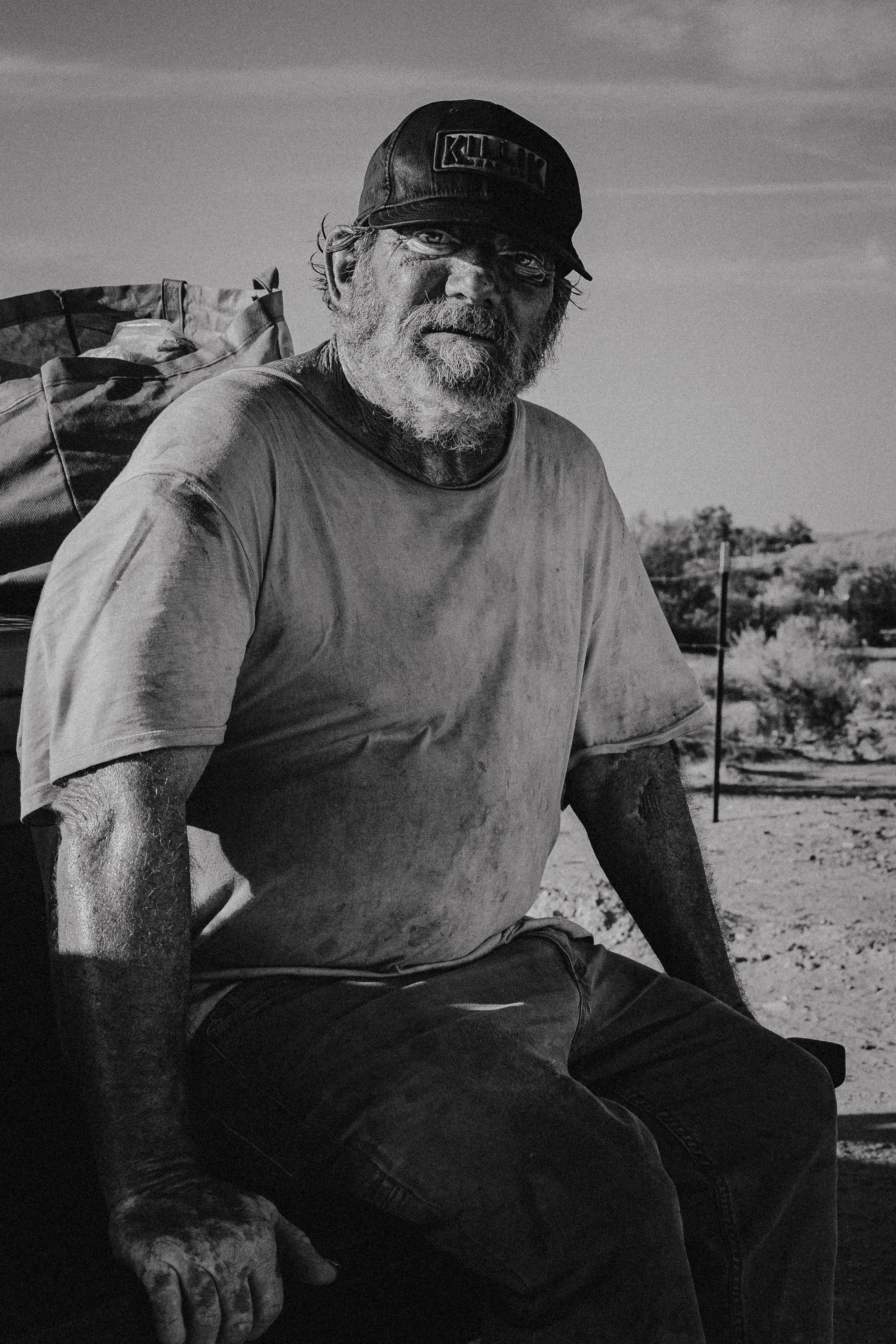
We gave this Slab City resident a lift up the road on the tailgate of my Tacoma, the heavy bag of supplies he had been trudging finally off his shoulders. Before taking his portrait I asked if he minded. “I don’t care,” he said with such easy indifference that, in a moment, we realized we were the strange ones here.